 Demon VS Robot DVSR Marketing Website
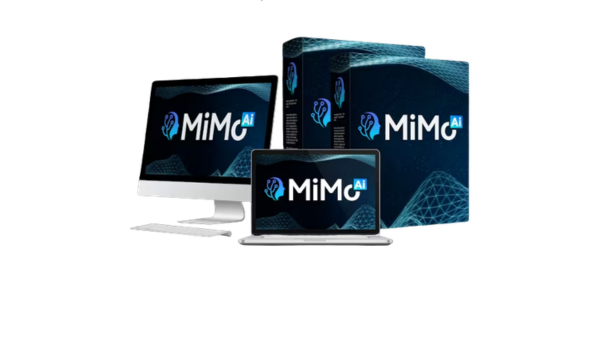
You might have seen “MiMo AI” show up a few times lately, such in a feed, a recommendation, or a review of a tool. What does it really mean, though? MiMo AI is a software platform that uses machine learning to automate and speed up the development of content, videos, and digital workflows.
This article is about MiMo AI as a software and technology solution, not the Mimo coding school app, Xiaomi's language model, or the AI tool made for creators, marketers, and enterprises. By the conclusion, you'll know what MiMo AI is, how it works, who it works best for, and how to get the most out of it.
With more than ten years of experience in software, tools, and technology, we'll explain MiMo AI to you in simple terms, without any jargon or fluff.
MiMo AI in 60 Seconds: Clear Definition and Core Idea

You can think of MiMo AI as the link between an unfinished idea and a finished asset that is ready to be published. It takes your input, such a text prompt, an image, a video clip, or structured data, and turns it into something real, like a short film, a visual scene, an automated report, or a full content pipeline.
The speed of execution is what makes this important. Making a finished marketing video used to take days of writing, recording, editing, and exporting before MiMo AI. With MiMo AI, the identical process takes only a few minutes, from prompt to preview.
Core Deliverables
- Primary users: Content creators, marketing teams, agencies, developers, and enterprise operations teams.
- Primary inputs: Text prompts, images, video files, datasets.
- Primary outputs: Videos, visual assets, content scripts, automated reports, and workflow results.
- Primary platforms: Web application, API access, and third-party integrations.
The main principle is straightforward. MiMo AI manages the repetitive, production-intensive aspects of creative activity. You provide the direction and strategy, while MiMo AI manages the execution at scale.
How MiMo AI Works: Simple Explanation of the Technology Behind It
MiMo AI works by using a mix of machine learning models, such as transformer-based architectures and generative neural networks, to take your input and give you a structured output. Because the system runs on cloud infrastructure, processing happens on servers, so your local hardware doesn't have to work as hard.
The logic behind the workflow is always the same. You tell MiMo AI what you want, it figures out what you mean by your input, and then its underlying model does a generating task based on patterns it learnt from a lot of training data. Before it gets to your preview screen, the outcome goes through quality controls, which are automatic systems that identify outputs that don't match your brand, are inconsistent, or are low-confidence generations.
The quality and speed of generation have gotten a lot better since early versions of AI tools in 2026. Most people get their first useful result in less than five minutes. For example, a marketing team can use MiMo AI to make ten different versions of an ad video on a Monday morning instead of spending a whole week doing just one version.
The human stays in the loop the whole time. MiMo AI speeds up production, but it doesn't make any decisions without your input. Your judgment guides the way.
Step-by-Step: From Idea to Output With MiMo AI
Knowing how the workflow works from start to finish helps you get things done faster and prevent making mistakes. Here's how a typical session with MiMo AI goes from beginning to end.
Step 1: Create an account or log in. You can make your MiMo AI account on the web or use an API key to connect it to an existing system. People who are new to the site should start with the web interface before moving on to the API endpoints.
Step 2: Pick the type of task you want to do. MiMo AI can handle a lot of different types of tasks, such making videos, automating content, creating assets, and workflows that are based on data. Choose the category that fits your project right now. The template collection has ready-made starting points for the most common jobs if you're not sure what to do.
Step 3: Put in your information. Depending on what you need to do, you can give a text prompt, upload an image or video file, or link a dataset. The quality of what you put in immediately affects the quality of what you get out. A ambiguous prompt gives a nebulous result, but a clear, structured brief gives you something you can use right away.
Step 4: Set up your settings. Set things like the length of the output, the style, the tone, the resolution, and the language. These options tell MiMo AI exactly how you want the result to look. They are what make the output fit your brand instead of being a generic one.
Step 5: Make and look at the preview. Click “Generate” and let MiMo AI take care of your request. Your browser shows the preview. Look it over carefully and see whether it fits your needs. Is it up to the standards that your audience expects?
Step 6: Edit and improve. You can change the pacing, regenerate some parts, switch graphic styles, or run the output again with a different prompt using MiMo AI's built-in editing capabilities. Iteration is a normal element of the process, not a warning that something went wrong.
Step 7: Export or combine. You may either download your finished item in the format you need or send it straight to your CMS, social media site, or digital asset management (DAM) system through integration. You can use the API to start this step automatically if you have an automated pipeline.
Every step builds on the one before it. The more carefully you go through the earlier steps, notably input quality and configuration, the less work you'll have to do at the end.
What Makes MiMo AI Different From “Regular” AI Tools?
Most general-purpose AI technologies are made to accomplish a lot of different things, such handle text, translation, summarization, and light content creation in a lot of different areas. MiMo AI is made to go deep. It's a specialized platform built for making things, automating them, and producing organized output on a large scale.
A lot of applications only let you make a draft or a static image. MiMo AI goes further and lets you do entire production workflows, make videos, batch process, export in several formats, and work with your team. It's not just a chatbot with some extra capabilities; it's a production environment that uses AI.
MiMo AI always stands out in three areas: speed, control, and scalability. You're not only making content; you're also creating a system that works every time you run it.
Key Features and Capabilities of MiMo AI in 2026
MiMo AI groups its features into sets that work together to cover the entire content production lifecycle, from the first generation to the final touches, automation, collaboration, and integration with other systems. These feature categories can help you figure out exactly where MiMo AI fits into your present process.
Creation Features: What Can You Actually Make With MiMo AI?
The layer where most people spend most of their time is the creation layer. The following types of output are supported by MiMo AI:
- Short-form videos (social commercials, product clips, and reels), including text prompts or product images. Typical time to get a usable result: 2-5 minutes.
- Long-form or explainer videos, with a defined screenplay or outline. Typical duration is 10-15 minutes, depending on length and intricacy.
- Visual scenes and static materials, input a detailed prompt or a reference image. Typical time: less than two minutes.
- Text scripts, captions, and metadata are generated alongside video outputs or as isolated items.
This place gives you a lot of creative freedom. Instead of editing frame by frame, you may set the visual language, pace, and brand tone from the settings panel. You can make a 30-second ad out of a product shot and a short narrative without having to change the editing timeline.
Editing, Refinement, and Control Tools
Generation is only the beginning. With MiMo AI, you can adjust the output without having to start over every time you want to.
You can change the style and speed of an existing output, regenerate individual parts while leaving the rest alone, and keep track of several versions of the same asset for A/B testing. If the first five seconds of a video don't go as planned, MiMo AI will redo that part on its own, leaving the remainder of your work alone.
This way of editing that doesn't hurt anything is what lets teams keep their brand consistent even when they make a lot of things. You never have to start again from scratch; you always have a solid base to work from.
Automation and Scale: Templates, Workflows, and Batch Tasks
MiMo AI's value grows over time in the area of automation. The platform has a collection of pre-made templates for the most typical production activities, like ad creatives, social media clips, onboarding films, and campaign materials. This means you don't have to start from scratch every time.
With workflow automation, you can set up processes to execute in order or at the same time. For example, you may automatically create several versions, apply brand settings consistently, and set up export or distribution. Batch processing goes a step further by uploading a CSV file with product details or a folder of source assets. MiMo AI then creates the output set for all of them.
For example, a SaaS business can make 10 distinct versions of a product launch video for ten different markets in one batch run instead of hiring separate companies to make videos for each location.
Pricing Plans and OTOs detailed
Front-End – MiMo AI App ($17 one-time)
- Full access to an all-in-one AI platform with unlimited prompts, image and video generation, and 200+ premium models
- Includes all core features for content creation, chatbots, funnels, and campaigns without monthly fees
- Replaces multiple expensive AI tools, saving significant costs while boosting productivity
- Ideal for beginners, creators, and marketers who want a complete AI toolkit in one place
- Early-bird pricing with expected increase or switch to subscription later
- Includes a 30-day money-back guarantee for risk-free testing
OTO 1 – MiMo AI Unlimited Pro ($47–$97 one-time)
- Removes all limits and unlocks unlimited prompts, images, videos, chatbots, websites, and campaigns
- Includes 100+ DFY chatbots, priority processing, and multi-language support
- Adds VIP training and tools for freelancing platforms like Fiverr
- Designed for users who want to scale output and income without restrictions
- Backed by a 365-day money-back guarantee
OTO 2 – DFY 100K Prompts Pack ($37 one-time)
- Access 100,000 done-for-you, high-converting AI prompts across multiple use cases
- Helps create better content, funnels, ads, and media faster with minimal effort
- Includes weekly new prompts and bonus training resources
- Great for beginners and creators who want speed and proven prompt systems
- Includes a 30-day money-back guarantee
OTO 3 – MiMo AI Agency Upgrade ($97–$167 one-time)
- Create and manage unlimited client accounts with a full agency dashboard
- Charge clients any price and keep 100% of profits
- Includes commercial license and priority support
- Perfect for freelancers and marketers building an AI service business
- Includes a 30-day money-back guarantee
OTO 4 – PageMate AI Website & Funnel Builder ($27 one-time)
- Build fast-loading websites and high-converting funnels with 1000+ templates
- Drag-and-drop builder with built-in optimization and security
- No hosting fees, includes SSL and full commercial rights
- Suitable for beginners and agencies offering web design services
- Includes a 30-day money-back guarantee
OTO 5 – TrafficPilot ($37 one-time)
- Automates free, targeted traffic to websites, funnels, and offers
- Generates leads and sales from organic sources without ads
- Runs on autopilot for consistent traffic and conversions
- Ideal for users struggling with traffic generation
- Includes a 30-day money-back guarantee
OTO 6 – Profit Niche Sites ($27 one-time)
- Get 50 DFY niche websites optimized for traffic and monetization
- Includes multiple income streams and built-in automation
- Clone and launch sites quickly for passive income
- Comes with commercial license for resale opportunities
- Includes a 30-day money-back guarantee
OTO 7 – Affiliate Empire ($37 one-time)
- Unlock 100+ DFY affiliate campaigns with autopilot income potential
- Includes ClickBank campaigns and full training
- Designed for building multiple income streams easily
- Perfect for scaling passive affiliate revenue
- Includes a 30-day money-back guarantee
OTO 8 – MiMo AI Reseller ($67–$147 one-time)
- Resell MiMo AI and keep 100% of profits across the funnel
- Includes DFY sales pages, videos, and full support handling
- No product creation or technical setup required
- Ideal for affiliates and marketers wanting instant income streams
- Includes a 30-day money-back guarantee
OTO 9 – White Label License ($247–$497 one-time)
- Rebrand and sell MiMo AI as your own software product
- Includes full setup, hosting, sales pages, and support
- Keep 100% of profits with full ownership rights
- Best suited for users wanting a SaaS business model
- Includes a 30-day money-back guarantee
Who Is MiMo AI For? Main User Types and Use Cases
MiMo AI is useful for a wide spectrum of people, from solo producers to large teams in big companies who need to manage complicated production pipelines with many stakeholders. The platform is made to grow with the user's demands instead of forcing them into a set model.
Content Creators and Influencers
One problem that solo creators always have is making enough content to stay visible without sacrificing quality or getting burned out. MiMo AI deals with that directly.
A creative can record a two-hour livestream, put it into MiMo AI, and have ten short films ready to share in less than thirty minutes. The creator is in charge of the plan and final evaluation, while the platform takes care of the segmentation, formatting, and captioning. The posting frequency rises increasing, while the production strain goes down.
Practical use cases for creators include:
- Repurposing long-form content into platform-specific short clips.
- Generating scripted video segments from written outlines.
- Producing visual content for multiple social channels simultaneously.
- Experimenting with different creative formats without a production team.
Marketers, Brands, and Small Businesses
Marketing teams have to work under tight budgets and deadlines, which makes traditional video production hard for every campaign. That equation's economics alter with MiMo AI.
A local firm can build a seasonal campaign with many creative versions in a few days instead of weeks. A digital marketing team can try out five different ad hooks with five different MiMo AI-generated video versions, all without having to pay for five separate production budgets. The cycle of creative iterations speeds up, and the cost per asset goes down.
The main benefits for marketing use cases are getting things to market quickly, having consistent visual branding across all outputs, and being able to customize content for different audience segments without having to do any extra effort.
Agencies, Enterprises, and Technical Teams
At the level of agencies and businesses, MiMo AI is more than just a single tool; it is a layer of production infrastructure. Agencies can create MiMo AI workflows that can be used again and again for their e-commerce or brand clients. These are standardized processes that always provide the same results, no matter who runs them.
Pain Point | MiMo AI Solution |
High cost of per-project video production | Batch generation and reusable templates |
Inconsistent brand voice across content | Brand kit settings applied at the template level |
Slow stakeholder approval cycles | Version management and in-platform review tools |
Manual API integration with existing stack | Native API/SDK access for pipeline integration |
Data security and compliance requirements | Cloud infrastructure with access controls |
The API and SDK make it possible for technical teams to add MiMo AI features to any current apps or data pipelines. This means that MiMo AI can work as a generation layer within a larger automatic system instead of being a separate tool.
Best Practices: How to Get Great Results With MiMo AI
It's not luck that gets you good outcomes with MiMo AI every time; it's the way you do things. After more than ten years of using software tools and production systems, I've noticed one thing that is true on every platform: the quality of the input sets the limit on the output.
Writing Effective Prompts and Briefs for MiMo AI
A prompt is what tells your AI system what to do. A well-organized brief cuts down on the number of times you need to revise anything before you can use it.
When you write a MiMo AI prompt, think of it as giving a professional contractor a short job description. Vague instructions lead to results that can be interpreted in several ways. When you give clear, structured instructions, the task will turn out the way you want it to.
The elements of an effective MiMo AI brief:
- Clear goal, State the exact output you want. (“A 30-second product explainer video for a mobile app.”)
- Audience, Define who will watch or use this. (“First-time smartphone users, aged 25–40.”)
- Duration and format, Specify length, aspect ratio, and platform. (“60 seconds, vertical 9:16, for Instagram Reels.”)
- Tone and style, Describe the visual and verbal register. (“Minimal, clean aesthetic. Direct language. No humor.”)
- Key message, Identify the one thing the viewer should take away. (“The app saves 30 minutes per day.”)
Example prompts:
- Weak: “Make a video about our app.”
- Strong: “Generate a 45-second explainer video for a task management app targeting remote teams. Use a clean, modern visual style with on-screen text annotations. End with a clear call-to-action: ‘Try free for 14 days.' Aspect ratio 16:9.”
The second prompt gives MiMo AI the context it needs to produce something functional on the first pass.
Ensuring Brand Consistency and Compliance
One of the hardest difficulties in content development is keeping the same brand across a lot of different things. Instead of having to look at each asset by hand, MiMo AI helps fix it fundamentally.
The first step is to make internal brand templates on the platform. At the template level, you should set the standards for your color scheme, font choice, logo positioning, and tone. No one has to remember to apply those settings manually; every output made from that template automatically gets them.
A recommended compliance checklist for MiMo AI outputs:
- Does the output align with your brand voice guidelines?
- Are logos, colors, and typography applied correctly?
- Has the content been reviewed for factual accuracy before publishing?
- Does the output meet platform-specific guidelines (e.g., Meta, YouTube, TikTok)?
- Has it passed through your organization's approval workflow?
Establishing an approval process before any MiMo AI output is made public is not optional; it is how you maintain the standard that your audience expects.
Testing, Measuring, and Improving Over Time
Exporting doesn't end the production cycle. Over time, the information you get from MiMo AI-generated material helps you make better briefs, better setups, and better results.
Before you go all out, do some tiny experiments. Make two or three different versions of a creative idea by using different prompts or style settings. Give them to a small group of your audience and keep an eye on the most important metrics, such as view completion rate, click-through rate, engagement, and conversion down the line.
Look for patterns in those outcomes. Which graphic approach made people watch longer? Which tone led to more conversions? Then use what you learned to set up your next MiMo AI. Your production process gets more and more accurate over time, and the quality of your output gets better with each iteration.
Risks, Limitations, and Ethical Use of MiMo AI
Every tool that works comes with a duty. It's the same with MiMo AI. Part of using the site professionally is knowing where the hazards are and how to deal with them.
Misrepresentation, copyright, and context collapse are the three biggest risks that come with using AI to create content. You can make visual content that lies to people, copies protected assets without permission, or takes context out of source material in ways that change the meaning. These aren't just hypothetical situations; they're genuine results that can happen when AI tools are utilized without rules.
This is what a responsible use scenario looks like: a company utilizes MiMo AI to make ads based on original scripts and product images they own. They check every output before releasing it and tell people when they use AI to help them do something if platform policies say they have to.
An irresponsible situation might include making fake videos of real individuals without their permission, sharing AI-generated content as real evidence, or using the platform to make things that break copyright, privacy, or community norms.
You don't have to choose to have human oversight; it's just the way things are when you use any generative AI tool for work.
What MiMo AI Can't (Yet) Do Reliably
Part of making smart choices is being clear about what your limits are. Based on what we know now, MiMo AI can't do the following in 2026:
- Highly specialized visual domains — MiMo AI excels at common content formats. Edge-case sectors (for example, medical imaging and forensic documentation) require domain specialists to assess outputs before they may be used professionally.
- Guaranteed factual accuracy—The software generates information based on patterns rather than validated data sources. Every factual claim in an output must be verified by a human before publication.
- Performance under low connectivity – Cloud-based processing necessitates consistent connectivity. High-resolution batch operations on low-bandwidth connections will have slower render times.
- unique brand aesthetics – Very unique or custom visual styles may necessitate several iterations before the outcome meets expectations exactly.
- Long-form narrative coherence – Human-defined structural frameworks function better than open-ended generation for extended multi-chapter content.
Setting expectations at this level helps your team plan production timelines realistically and assign human review where it matters most.
MiMo AI vs. Other AI Tools: How Does It Compare?
To choose the correct tool, you need to know both the product and the other options. MiMo AI is not a generalist chatbot or a typical editing suite; it is something else in the AI environment of 2026.
Tool Comparison Table
Dimension | MiMo AI | Generic AI Content Tools | Traditional Video Editors |
Ease of use | High — template-driven | High — chat-based | Moderate to Low |
Output control | High — configurable parameters | Low to Moderate | Full — frame-level control |
Generation speed | Fast (2–15 min per asset) | Instant (text) / Variable | Slow — manual hours |
Collaboration | Built-in versioning & approvals | Limited | Limited |
Automation | Native batch processing | Rare | Not available |
API Support | Yes | Varies | Rarely |
Best For | Production at scale | Ideation & drafting | Precision post-production |
When to Choose MiMo AI vs. Traditional Editing Only
When speed, volume, and consistency are the most important factors, MiMo AI is the best choice. The automated layer MiMo AI adds makes it possible for your team to create 10 different versions of an ad, localize material for several regions, or keep up a high-frequency publishing schedule.
When a project needs frame-by-frame accuracy, post-production effects that are very specific to the project, or creative judgments that need craft-level judgment, traditional editing is still the best alternative. For example, a brand documentary that looks like a movie is not a MiMo AI use case; it's a specialized post-production effort.
Projects ideal for MiMo AI:
- Social media content series.
- Product demo and explainer videos.
- Localized campaign variations.
- Batch ad creative generation.
- Automated report visualizations.
Situations where specialist editing is preferable:
- Long-form narrative content requiring precise storytelling.
- Projects with highly specific visual effects.
- Work where legal standards require fully documented production chains.
They use both, and the best teams don't pick one over the other. MiMo AI takes care of volume and efficiency, while editors and strategists work with people to ensure quality, accuracy, and artistic direction.
Combining MiMo AI With Your Existing Tool Stack
MiMo AI is meant to work with production pipelines, not replace them completely. The idea isn't to cause problems, but to speed up the elements of your process that are already slowing everything else down.
A content production pipeline using MiMo AI could look like this: a scriptwriting tool makes the first copy, MiMo AI turns it into a video asset, a human editor checks it and makes small changes, and then the asset goes straight to your CMS or social scheduling. Every stage still does what it was meant to do, but MiMo AI speeds up the production phase that used to take the most time.
If your team has a digital asset management (DAM) system, the procedure is different: source assets live in your DAM, MiMo AI retrieves them over an API, makes derivative content, and then pushes the final assets back into the DAM or directly into your CMS for publishing.
The main idea here is that integration is better than replacement. You don't have to change your whole workflow to use MiMo AI. Just find the one or two production bottlenecks that take your team the most time each week and add MiMo AI to those locations first. As your team gets more comfortable with the platform, you can add more features.
Supplemental: Common Questions People Ask About MiMo AI
Is MiMo AI free to use?
MiMo AI has a free trial or entry-level option that lets new customers try out the platform before they pay for a plan. Access to the free tier usually comes with limits on how much you may use it, watermarked outputs, and a limited number of features. People who need to make professional or commercial content will find that a premium subscription removes those limits and gives them access to all of the platform's generating and automation features.
Is MiMo AI safe and legal to use for commercial projects?
MiMo AI has a free trial or entry-level option that lets new customers try out the platform before they pay for a plan. Access to the free tier usually comes with limits on how much you may use it, watermarked outputs, and a limited number of features. People who need to make professional or commercial content will find that a premium subscription removes those limits and gives them access to all of the platform's generating and automation features.
What types of content should I avoid creating with MiMo AI?
Responsible use of MiMo AI means staying clear of the following content categories:
- Synthetic media that misrepresents real people without their consent.
- Misinformation or fabricated documentary content.
- Materials that promote hate, discrimination, or illegal activity.
- Content that reproduces copyrighted material without authorization.
- Any output that violates the terms of service of the platform you intend to distribute on.
Does MiMo AI replace human creators or editors?
No, MiMo AI doesn't replace human creativity; it makes it better. The platform is great at speed, making different versions, and being efficient in manufacturing. At this point, no AI system can successfully copy the strategic judgment, storytelling instinct, cultural subtlety, and quality control that human creators bring to the table. The interaction between MiMo AI and human operators is fruitful because they work together: the AI handles volume and the person handles direction and final approval.
How is MiMo AI different from the Mimo coding app or Xiaomi's MiMo AI?
These three things have the same name, but they are all very different. If you were seeking for a way to learn how to code, the Mimo coding software is a great option. It helps people who want to learn how to code. Xiaomi's MiMo AI is a big language model that is part of Xiaomi's devices and services. This article talks about MiMo AI, which is a platform for software and AI tools that helps creators, businesses, and technical teams make and expand digital assets quickly and easily.
Can I use MiMo AI without technical or editing skills?
Yes. The web interface for MiMo AI is made for people who don't know how to edit videos or code. You may make a final item from a text prompt without any prior production knowledge thanks to the template collection, guided setup options, and step-by-step generation methodology. The beginner-friendly approach in Section 2.1 gives customers a clear way to get started: sign up, choose a template, add your input, and produce. Technical abilities only matter if you're using its API to add MiMo AI to a custom development workflow.
[/tie_list] [/box]- SPECIAL BONUS 1 – MultiNetwork Poster

- SPECIAL BONUS 2 – ContentLynk

- SPECIAL BONUS 3 – AK Booster Pro

- SPECIAL BONUS 4 – FB MultiPoster

- SPECIAL BONUS 5 – GramHood

- SPECIAL BONUS 6 – Serp Scribe

- SPECIAL BONUS 7 – RankMe

- SPECIAL BONUS 8 – RankMe