 Demon VS Robot DVSR Marketing Website
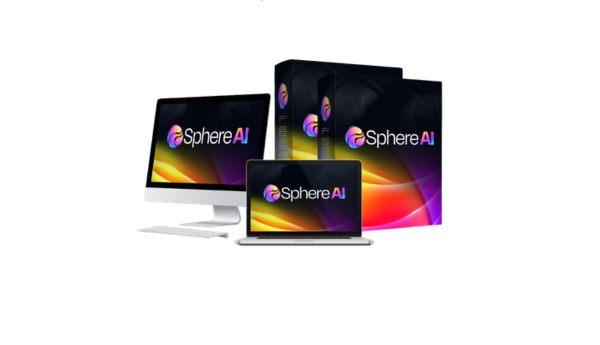
 If you've searched “Sphere AI” and landed on three different websites all claiming to be the real thing, you're not making a mistake. The term covers multiple independent products, research artifacts, and organizations that share no connection beyond a name.
This guide maps the main entities you'll encounter, a Y Combinator-backed tax compliance platform, an enterprise data governance system linked to Oracle customer deployments, Meta AI's open-web research corpus, an AI-driven website and SEO builder, and a cluster of investment and analytics tools. Each targets a different audience and solves a different problem.
Whether you're an e-commerce founder, an enterprise data leader, a marketer, a developer, or someone who watched a YouTube review and still isn't sure what was being sold, this guide gives you what you need:
- A plain-language definition of “Sphere AI” as a search term
- A breakdown of the main entities and what each one does
- A legitimacy check, which ones are real, and how to spot shady offers
- A decision framework for choosing the right one for your situation
One clarification upfront, Sphere AI, with over 10 years of experience in software, tools, and technology, frames this guide from a position of vendor-neutral analysis, not as a claim of ownership over any of the brands described below.
What Does “Sphere AI” Mean? (Clear Definition & Term Breakdown)

“Sphere AI” is not a single global company. It's a search term that simultaneously refers to a generic concept, multiple brand names, and specific research datasets, all appearing on the same results page.
At the generic level, “sphere” as a metaphor suggests coverage across a full domain, a sphere of data, a sphere of operations, a sphere of influence. AI companies adopt this framing to signal holistic reach. That metaphorical appeal is exactly why so many unrelated organizations have settled on “Sphere” as part of their identity.
At the brand level, you'll find several distinct entities: Sphere (tax compliance, Y Combinator portfolio), Sphere Global / OrgBrain (enterprise data governance, Oracle deployments), and a separate AI website-building platform also operating under “Sphere AI.” Investment management tools and analytics consulting firms use variations of the same name.
At the research level, Meta AI published a large-scale web corpus called Sphere, a dataset used to evaluate knowledge retrieval in language models. This has nothing to do with any of the commercial platforms.
When someone searches “What is Sphere AI?” they typically want one of three things: a definition, a list of the main players, or clarity about what appeared in an ad or video they just watched. The table below separates these three usage modes at a glance.
Usage Type | What “Sphere AI” Refers To | Typical Audience |
Generic concept | AI systems covering a “sphere” of data or operations | General readers |
Brand / company name | Named “Sphere” or “Sphere AI”, commercial platforms | Buyers and users of that product |
Research artifact | Meta AI's Sphere corpus and similar open datasets | ML and NLP researchers |
With that disambiguation established, the next sections walk through the main entities you'll actually encounter, starting with the enterprise data governance platform that appears heavily in Oracle-related searches.
Sphere Global / OrgBrain – Enterprise GenAI & Data Governance Platform
What Is Sphere Global (OrgBrain) in the Enterprise AI Context?
Sphere Global, operating in close association with OrgBrain, is an enterprise data intelligence and governance platform. It uses generative AI to map, classify, and make sense of organizational data estates, the kind that sprawl across multiple departments, systems, and cloud environments.
The platform shows up frequently in Oracle customer stories and case studies, which signals real-world deployment at scale rather than proof-of-concept status. Organizations in regulated industries, finance, energy, healthcare, and the public sector, represent its primary user base. These are environments where knowing what data you hold, where it lives, and what policies govern it isn't a nice-to-have, it's a compliance obligation.
This Sphere is distinct from the tax-focused Sphere (Y Combinator-backed) and completely unrelated to Meta's research corpus. When enterprise searches surface “Sphere AI” in the context of data governance, this is typically the entity in question.
How This Sphere Uses GenAI for Data Intelligence & Compliance
The platform applies generative AI at several layers of the data management process. These are the core functions it performs across a multi-system data estate:
- Auto-discovery and classification of data assets across connected systems, reducing the time teams spend manually cataloguing what exists
- Identification of sensitive or regulated data, personal information (PII), financial records, health data, flagging fields that trigger GDPR, SOX, or sector-specific obligations
- Relationship mapping between data sources and business processes, so governance decisions are made with full visibility into downstream impact
- Summary generation for auditors and regulators, translating technical data inventories into structured views without requiring manual preparation
- Policy suggestions based on observed data patterns, recommending governance controls before a compliance gap becomes a liability
The practical outcome is faster audit preparation, fewer blind spots across the data landscape, and clearer accountability from raw data to business decision.
One important boundary, the AI assists human governance teams, it surfaces patterns and generates recommendations. The decisions themselves stay with the people responsible for compliance. That distinction matters in regulated industries where accountability cannot be delegated to a machine.
Consider a financial institution managing customer data across dozens of systems. Sphere Global's genAI can scan that environment, identify all customer-related datasets, flag fields that qualify as GDPR-sensitive, and produce a structured inventory ready for regulatory review. The institution's compliance team then reviews, approves, and acts.
When to Use Enterprise Sphere vs Other Governance Tools
The right fit for a platform like Sphere Global comes down to the scale of your data problem and the depth of your compliance obligations.
This type of governance platform is a strong match when you already operate within Oracle or a major cloud ecosystem and want AI-driven intelligence layered on top of existing infrastructure. It's also the right direction when data sprawl has become a strategic risk, when your teams genuinely don't know what data they hold, or when audits take months because classification is done manually.
Use Case | Basic Tools | GenAI-Driven Sphere-Type Solution |
Small team, single system | Access controls and audit logs are sufficient | Overcomplicated and unnecessary |
Mid-size company, multi-cloud | Manual cataloguing with standard GRC software | Starting to become relevant |
Large enterprise, regulated industry | Inadequate, too slow, too manual | Strong fit, reduces classification time and compliance gaps |
Classic data catalogs are useful but largely static. You add data assets manually, maintain them manually, and query them manually. A genAI-driven governance platform changes that loop by continuously discovering, classifying, and flagging without waiting for human input.
Traditional GRC (governance, risk, and compliance) suites are process-heavy. They manage workflows, sign-offs, and documentation well. What they don't do well is surface insights from the data itself, that's where AI-layered platforms like Sphere Global add a function that legacy tools can't replicate.
If you're a small company with one or two systems, a basic access control and audit log setup is the correct answer. Don't buy complexity you can't absorb. From an expert perspective on software and technology tools, the pattern here is clear: match the tool to the actual scale of the problem, not to the ambition of the vendor pitch.
Sphere AI for Web & SEO – AI-Built, Semantic SEO-Ready Websites
What Is the Sphere AI Website/SEO Platform?
This Sphere AI is a website builder and content management platform built around one specific outcome, discoverability in AI-driven search environments. That means Google's Search Generative Experience (SGE), AI Overviews, and conversational tools like ChatGPT's browsing mode.
Unlike traditional no-code builders that focus on design templates, this platform's pitch is semantic structure from day one. The typical users are small businesses, independent creators, marketing agencies, and lean teams who need a web presence that performs in search, but don't have in-house developers or SEO specialists.
The core outcomes it targets:
- Sites structured around topic clusters and entities, not individual keyword pages
- Automatic schema and structured data generation for FAQs, local businesses, and articles
- Content aligned to question-based search behavior, not just exact-match phrases
- Built-in signals for AI search visibility, addressing how LLMs surface information
Key Features: Semantic Structure, Topic Clusters & AI-Ready Content
The distinction between this approach and traditional SEO tooling is meaningful. Classical SEO optimized individual pages for specific keywords. Semantic SEO, the approach this platform is built around, treats the entire site as a knowledge structure where topics, entities, and questions connect.
Classic SEO Focus | Semantic / Sphere-Style Focus |
Exact-match keywords on individual pages | Topic clusters linked into a coherent knowledge hub |
Ranking a single URL for a single query | Covering the full question set around a topic |
SERP snippet targeting only | SERP + SGE + AI assistant response optimization |
Manual schema markup | Auto-suggested or auto-generated structured data |
The platform handles site architecture decisions that most builders leave entirely to the user, where to place FAQs, how to structure internal links, which schema types to apply to which content. For a local service business wanting to appear in AI Overviews, that structure is the difference between being surfaced and being invisible.
From a 10+ year perspective working across software and content tooling, the shift from keyword-page optimization to entity-relationship architecture is the most significant technical SEO change of the past decade. Tools that bake this into their foundation rather than treating it as an add-on are closer to where search is heading.
Aligning with Google's Helpful Content guidance matters here too. Auto-generated structure does not replace expert-reviewed content, it provides the scaffolding. The content itself still needs to reflect real knowledge and genuine intent.
When to Use an AI Website/SEO Sphere vs Traditional Options
This platform fits a specific operational profile. It's not a replacement for custom development, and it's not the right call in every situation.
It's a strong fit when you need a new site quickly and care about search and AI visibility from the start. If you don't have in-house developers or SEO capacity, and you're willing to review and refine AI-assisted content rather than publish it without oversight, this type of builder reduces the time from zero to a structured, findable web presence.
It's less appropriate when your requirements include complex custom UX, web applications with dynamic back-end logic, or YMYL (Your Money or Your Life) domains, legal advice, medical information, financial planning, where regulatory compliance and deep expert authorship matter more than speed of deployment.
A local law firm, for example, might use a Sphere-style platform for site architecture and FAQ structure, but keep practicing attorneys writing and approving every published page. An e-commerce catalog might auto-generate category descriptions through the platform but manually refine core product pages where conversion rate matters.
Pricing Plans and OTOs detailed
Front-End – Sphere AI ($14.93 one-time)
- AI visibility and tracking platform for modern search ecosystems
- Analyze how your offers appear inside AI-generated answers
- Track competitor presence across platforms like ChatGPT, Google AI, Claude, and more
- Identify opportunities to improve visibility and mentions
- Helps optimize positioning for AI-driven search results
- No monthly fees, pay once for lifetime access
- Suitable for marketers, affiliates, businesses, and creators
- Includes a 30-day money-back guarantee for risk-free testing
OTO 1 – Sphere AI Unlimited ($29 – $39.44 one-time)
- Removes all platform limitations and usage caps
- Run unlimited campaigns across multiple platforms
- Promote more offers and handle higher traffic volume
- Includes faster servers and priority support
- Ideal for scaling visibility and long-term growth
OTO 2 – Sphere AI Done-For-You ($29 – $39 one-time)
- Access ready-made campaigns and promotional assets
- Includes pre-built content and marketing materials
- Reduces setup time and eliminates trial-and-error
- Launch faster with proven structures
- Ideal for beginners or quick execution
OTO 3 – Sphere AI Automation ($29 – $39 one-time)
- Done-for-you Facebook traffic system
- Includes account setup, content, and automation
- Generates leads and traffic automatically
- Runs in the background with minimal input
- Ideal for hands-free traffic generation
OTO 4 – Sphere AI 10X Traffic ($29 – $39 one-time)
- Delivers traffic directly to your chosen links
- Works for affiliate pages, opt-ins, or sales pages
- No setup required, just provide your URL
- Helps increase exposure and visibility quickly
- Ideal for fast results without manual effort
OTO 5 – Sphere AI Platinum ($47 – $67 one-time)
- Adds audiobook and podcast creation features
- Convert text into high-quality audio automatically
- Create content for platforms like YouTube, Spotify, and more
- Opens additional monetization opportunities
- Ideal for content creators and freelancers
OTO 6 – Sphere AI Diamond ($67 – $97 one-time)
- All-in-one AI content creation suite
- Generate blogs, websites, ads, social content, and images
- Supports multiple languages and niches
- Reduces need for multiple tools or freelancers
- Ideal for agencies and content-based businesses
OTO 7 – Sphere AI Reseller ($67 – $97 one-time)
- Resell Sphere AI and keep 100% of profits
- Includes ready-made sales pages and marketing materials
- No need to handle product delivery or support
- Turn the platform into a software business
- Ideal for marketers and entrepreneurs building income streams
Is “Sphere AI” a Scam? How to Check Legitimacy Across All These Brands
The Direct Answer: Is Sphere AI a Scam?
No, the main established “Sphere AI” entities are not scams. The Y Combinator-backed Sphere (tax compliance) carries one of the most credible institutional signals in startup validation. The enterprise Sphere Global platform appears in verifiable Oracle customer deployments. Meta AI's Sphere corpus is an academic research dataset published through Meta's AI research division.
These are real organizations solving real problems. The legitimacy concern arises from a different direction, because “Sphere AI” is a generic, trending label, low-quality operators can attach to it. A YouTube channel running affiliate promotions for an unrelated tool, a funnel page using “Sphere AI” in its headline to capture branded search traffic, a site mixing logos from legitimate companies without linking back to originals, these are the actual risks.
The key distinction is this, a scam claim must be about a specific entity or website, not the term “Sphere AI” in the abstract. Before drawing any conclusions, identify which Sphere you're dealing with.
How to Verify Any “Sphere AI” You Encounter
The following checklist applies to any platform or offer that appears under the “Sphere AI” label. Work through it before providing payment details or committing to any subscription.
- Confirm the exact brand name and domain. The YC-backed Sphere is listed at ycombinator.com/companies/sphere. If the URL is a variation of that domain rather than the source, stop.
- Look for a traceable team and company registration. Real products have named founders or executives with verifiable professional histories. Anonymous products with no identifiable leadership are a warning sign, regardless of how polished the site looks.
- Check for detailed product documentation versus vague marketing. A genuine AI platform has specific documentation: API references, pricing pages, integration guides, and support channels. Vague language like “AI-powered breakthrough solution” without technical specifics signals a product that may not exist in the form described.
- Find independent reviews or coverage from sources outside the company's own channels. Credible tools appear in third-party review platforms, industry publications, or technical communities. A product with reviews only on its own site, or only through affiliate blog posts and YouTube promotions, warrants closer scrutiny.
- Assess website quality and professionalism. Spelling errors, broken links, and stock photography that doesn't match the claimed company context are signs worth noting.
- Search “[brand name] reviews” and “[brand name] scam” and read critically. Look for patterns across multiple independent sources, not one or two affiliate-linked posts.
- Be cautious of “Sphere AI masterclass” or “software bundle” offers. These frequently attach the name to unrelated products without any connection to the original platform.
- Treat countdown timers and “only today” pricing as decision-pressure tactics. Legitimate SaaS platforms don't require you to buy in the next 14 minutes.
- Don't give payment details to sites that use stolen logos without linking back to originals. Pulling a company's logo without a verifiable relationship is a common trust-faking technique.
- Start with demos and free trials. Every credible platform in this space offers some form of low-risk entry. Avoid lifetime deals from unknown vendors without substantial third-party validation.
One specific note on YouTube, many “Sphere AI review” videos are affiliate promotions. The reviewer earns a commission if you click their link, which creates an incentive to present the product favorably regardless of actual performance. Cross-check any strong recommendation against independent sources before acting on it.
How to Choose the Right “Sphere AI” for Your Situation
The confusion around “Sphere AI” as a label largely dissolves once you've named your actual problem. Start there, not with a brand, but with a business need. The following five steps move you from ambiguity to a clear vendor shortlist.
- Step 1: Define your core problem. Is it tax calculation across multiple jurisdictions? Enterprise data governance and compliance risk? Website visibility in AI search? ML research and dataset access? Investment analytics? The problem category determines which “Sphere” is relevant, and whether any of them fit at all.
- Step 2: Match your problem to the right entity category. Tax and transactional compliance points toward the YC-backed Sphere. Multi-system data governance in a regulated enterprise maps to Sphere Global / OrgBrain. Semantic website structure for AI-era search discoverability matches the Sphere AI web platform. ML research and retrieval benchmarking connects to Meta's Sphere corpus.
- Step 3: Shortlist one or two specific vendors within that category. Within each space, “Sphere” is one option among several. Tax compliance also includes Avalara and TaxJar. Enterprise governance also includes Collibra. AI website builders have multiple competitors. Evaluate Sphere alongside alternatives on the same criteria.
- Step 4: Validate legitimacy using the checklist in the previous section. This step applies regardless of how credible a vendor seems based on marketing alone.
- Step 5: Run a low-risk test. Request a demo, run a pilot project, or use a sandbox environment before full deployment. Assess technical fit, integration with your existing stack, budget alignment, and internal capacity to manage the tool.
If your problem doesn't map cleanly to any of these categories, the answer may be a more general-purpose AI platform or a domain-specific tool that doesn't carry the “Sphere” label at all. A mid-size DTC brand that clarifies its primary need is organic search visibility, not tax automation, quickly realizes the relevant Sphere AI is the web platform, not the compliance engine.
Future Trends: How the “Sphere AI” Landscape May Evolve
The naming pattern that produced “Sphere AI” isn't going away. Abstract, evocative tech names, Sphere, Fabric, Cloud, Mesh, will continue to be adopted across domains because they carry broad metaphorical resonance without locking a company into a single use case. This means the disambiguation problem will grow, not shrink.
Several trends are accelerating that growth. AI-generated search summaries (Google AI Overviews, Bing Copilot) are changing how brands surface, a company doesn't just need a ranked page, it needs to be cited within an AI-assembled answer. Retrieval-augmented generation (RAG) is reshaping how enterprise knowledge systems work, which makes data governance platforms like Sphere Global more strategically relevant. Domain-specific AI copilots are appearing in every vertical, and many will adopt evocative brand names that overlap with existing entities.
The practical implication for buyers and users: long-term vendor relationships will depend less on brand names and more on three specific factors, proven fit for your actual use case, transparent handling of your data, and a clear compliance and security posture. A platform named “Sphere AI” that scores well on those factors is worth pursuing. One that scores poorly isn't worth the confusion.
Vendor consolidation is also likely. Some of the smaller entities currently operating under “Sphere” branding will be acquired, renamed, or discontinued over the next two to three years. Choosing a platform backed by institutional investors, established enterprise customers, or a research institution reduces that specific risk.
Supplemental FAQ: Common Questions About “Sphere AI”
Is There One Official “Sphere AI” Company?
No. There is no single global “Sphere AI” corporation. The term refers to multiple independent organizations, research datasets, and commercial platforms operating across entirely separate domains, tax compliance, enterprise data governance, AI-era web building, ML research, and investment analytics. When someone asks about “Sphere AI,” the first step is always to specify which one: which problem, which industry, which context.
Why Do So Many AI Tools Use “Sphere” in Their Names?
The word “sphere” carries specific metaphorical value for technology companies. It suggests completeness, a full circle of coverage with no gaps. It's domain-neutral, meaning it works equally well for a tax platform, a data governance system, or an SEO tool. And it's memorable without being technically restrictive.
The consequence of that broad appeal is predictable: multiple unrelated companies land on the same name, SERP results bundle them together, and users spend time disambiguating instead of evaluating. The naming pattern itself is a lesson in why abstract brand names create long-term discovery friction, even when the underlying products are genuinely distinct.
How Does Sphere (Any Type) Compare to Non-Sphere Competitors?
The evaluation criteria don't change because the brand name does. For any “Sphere AI” platform in any category, compare it against alternatives on these dimensions:
- Use-case coverage: Does it solve the specific problem you have, or does it require you to adapt your process to fit the tool?
- Stack integration: Does it connect with your existing systems, your CRM, cloud environment, CMS, or ERP?
- AI transparency: Does the vendor explain how its models work, what data they train on, and what the error rate looks like?
- Pricing and contract structure: Is pricing transparent? Are there exit options, or does the contract lock you in?
- Demonstrated results: Are there verifiable case studies, third-party benchmarks, or public reference customers?
For tax compliance, compare Sphere against Avalara and TaxJar on jurisdiction coverage and integration depth. For enterprise governance, compare Sphere Global against Collibra on metadata management depth and Oracle vs. multi-cloud compatibility. For semantic web building, compare the Sphere AI platform against alternatives on schema generation quality and AI search visibility tracking.
Treat “Sphere” as one candidate in a structured evaluation, not a default selection because the name appeared in your search.
Do You Need a “Sphere AI” at All?
The honest answer is: it depends on whether your problem actually requires the level of capability these platforms offer.
If your challenge is straightforward, single-country tax filing, a simple five-page website, basic portfolio tracking, you don't need a platform architected for multi-system complexity. Buying that complexity adds cost and operational overhead without proportional return.
If your challenge is genuinely complex, multi-jurisdiction tax compliance, a sprawling enterprise data estate with regulatory exposure, a content operation that needs to compete in AI-assisted search, or institutional-grade investment analytics, then a “Sphere-type” platform starts to make sense.
The most common mistake is buying to the brand rather than to the need. A company that deploys an enterprise data governance platform when a simple access control setup would have been sufficient has spent money on a problem they didn't have. Start with the problem statement. Let the platform selection follow from that, not from a search term that happens to surface an interesting website.
[/tie_list] [/box]- SPECIAL BONUS 1 – MultiNetwork Poster

- SPECIAL BONUS 2 – ContentLynk

- SPECIAL BONUS 3 – AK Booster Pro

- SPECIAL BONUS 4 – FB MultiPoster

- SPECIAL BONUS 5 – GramHood

- SPECIAL BONUS 6 – Serp Scribe

- SPECIAL BONUS 7 – RankMe

- SPECIAL BONUS 8 – RankMe