 Demon VS Robot DVSR Marketing Website
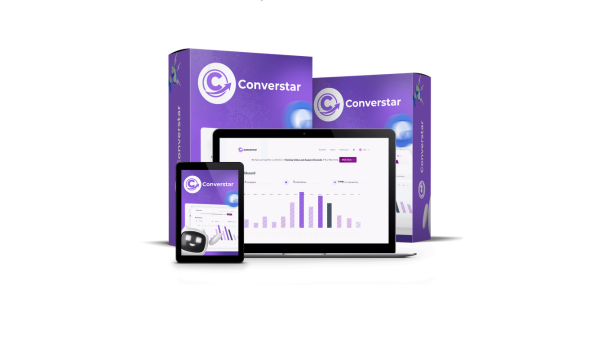
 If you've been seeing “Converstar AI” appear in your research feed lately, you're not alone. This AI-powered conversion optimization platform installs via a single line of code, and it quietly turns your existing traffic into a measurable source of leads and sales.
Here's the problem most site owners share: traffic arrives, but over 90% of visitors leave without clicking, signing up, or buying anything. That's not a traffic problem, that's a conversion gap. Converstar AI addresses it by adding behavior-triggered popups, smart CTAs, countdown timers, and social proof directly onto your site, without touching a single line of design code.
In tests across multiple site types, users have reported 2–5x more leads from the same traffic volume. One e-commerce case saw a 189% jump in recovered cart sales within a measured campaign period.
This guide covers everything you need to make an informed decision:
- What Converstar AI actually is, and what it isn't
- How it works under the hood, from script install to live campaign
- Key features, real results, and honest pros and cons
- How it compares to OptinMonster, Hotjar, and Privy
- Who it's built for, bloggers, e-commerce stores, SaaS products, coaches, local businesses, and agencies
This is a practical, experience-based review, not a product brochure.
So what exactly is Converstar AI, and how does it work?
What Is Converstar AI? (Clear Definition for 2026)

Converstar AI is an AI-powered conversion rate optimization (CRO) platform that uses one line of code to deploy behavior-based popups, CTAs, countdown timers, and social proof widgets on any website, turning existing traffic into more leads and sales without redesigning the site.
That single sentence captures the core of it. You don't rebuild anything. You don't hire a developer. You paste a script tag into your site's header, and Converstar AI begins reading visitor behavior in real time, tracking scroll depth, time on page, exit intent, device type, and traffic source, then deciding which campaign to show, when, and to whom.
The platform runs across WordPress, Shopify, sales funnels, and custom-coded sites. If your site can accept a script in its header section (or through Google Tag Manager), Converstar AI can run on it.
One important clarification: Converstar AI is not a chatbot tool, not a pool cover product (sometimes confused with “Coverstar”), and not an email service provider. It sits in the category of on-site engagement platforms, similar in concept to OptinMonster or Privy, but with a stronger emphasis on AI-driven behavioral segmentation and trigger logic.
Here's a simple scenario to illustrate. A visitor lands on your blog post, reads for about a minute and thirty seconds (90 seconds), then moves their cursor toward the browser tab. At that moment, Converstar AI detects the exit signal and shows a tailored opt-in offer, a content upgrade, a discount, or a lead magnet. The visitor pauses, reads the offer, and subscribes. That conversion would never have happened without the intervention.
To understand why this kind of on-site layer matters so much, you need to see the “leaky bucket” problem most websites have.
Why Converstar AI Matters: Fixing the “Leaky Bucket” Conversion Problem
Imagine pouring water into a bucket with holes in the bottom. That's what most websites do with traffic. More water (visitors) keeps pouring in, but it drains out before doing anything useful. The solution isn't to pour faster, it's to patch the holes.
The “leaky bucket” in web terms is the gap between sessions and conversions. On average, more than 90% of site visitors leave without taking a defined action, no opt-in, no purchase, no form submission. The causes are consistent across most sites: generic calls to action, wrong message timing, no sense of urgency, and zero personalization.
Most site owners respond by spending more on ads or SEO. That's understandable, but it doesn't fix the underlying gap. If your page converts at 1%, doubling your traffic doubles your leads. But if you bring that conversion rate to 2%, you double your output from the same traffic volume, with no extra acquisition cost.
Converstar AI acts as a permanent conversion layer sitting on top of your existing content. The platform identifies four recurring symptoms of low-performing sites:
- Visitors land and scroll but never engage with a CTA.
- Cart or form abandonment spikes near checkout or sign-up.
- Blog content generates sessions but no email subscribers.
- Paid traffic converts at a rate far below its cost-per-click potential.
Against each of these, Converstar AI deploys timely messages tied to actual visitor behavior, exit-intent signals, scroll depth thresholds, time-on-page intervals, combined with personalized offers, visual urgency, and social proof. That combination doesn't just recover abandoning visitors, it changes the economics of your existing traffic.
Key Features of Converstar AI (Overview Table)
Converstar AI is not a single-function popup tool. It's a multi-layer campaign engine that combines behavioral tracking, smart targeting, visual design, and analytics into one coordinated system. Each feature reinforces the next.
The table below maps each core capability to its mechanism and practical output.
Feature | What It Does | How It Works | Typical Benefit / Use Case |
AI Behavioral Tracking | Reads visitor actions in real time | Monitors scroll, time, device, source, exit signals | Activates the right campaign at the right moment |
18+ Smart Triggers & Campaign Types | Controls when and how campaigns appear | Trigger rules based on behavior, page, segment | Precise targeting reduces intrusion, lifts opt-ins |
Real-Time Social Proof Widgets | Shows live activity on the site | Displays recent purchases, sign-ups, or views | Builds trust and urgency without manual updates |
Countdown Timers & Scarcity Tools | Creates deadline-based urgency | Customizable timers linked to offers or campaigns | Reduces hesitation, accelerates purchase decisions |
One-Line Code Install & Compatibility | Connects to any site without plugins | Script tag placed in the site header or via GTM | No developer needed, works on any platform |
Dashboard, Analytics & A/B Testing | Measures and refines campaign performance | Tracks impressions, conversions, click-through rates | Continuous improvement with data-backed decisions |
Templates & Design Customization | Speeds up campaign creation | Pre-built templates with drag-and-drop editing | Launch-ready campaigns in minutes |
Email & CRM Integration | Sends captured leads directly to tools | Connects with ESP and CRM platforms via native or webhook | Lead data flows without manual export |
Users across different site types commonly report 2–5x more leads, 20–30% of abandoned carts recovered, and 20–25% higher on-page conversion rates from specific campaigns. These figures come from user-reported tests and case snapshots, not guaranteed outcomes, since results depend on traffic volume, campaign configuration, and niche.
What makes Converstar AI different from a standard popup tool is how these features interact. Behavioral tracking feeds the trigger logic. The trigger logic activates the right campaign format. The campaign uses social proof and urgency to convert. Analytics feed back into refinement. It's a loop, not a feature list.
The next sections walk feature-by-feature through how each element works and when to use it.
How Converstar AI Works: From Install to Live Campaigns
The setup process is one of Converstar AI's most discussed advantages. Users regularly report going from account creation to a live, active campaign in under 60 seconds, a realistic claim, given the one-code installation model.
Step 1: Install the Script Tag
You copy one line of JavaScript and paste it into your site's section. On WordPress, this can be done through a theme editor or a header plugin. On Shopify, it goes into the theme code. For any platform, Google Tag Manager (GTM) works as an alternative deployment method. No page rebuild required.
Step 2: Behavioral Tracking Begins
Once the script fires, Converstar AI starts monitoring visitor sessions. It reads scroll depth, time-on-page, cursor movement, referring traffic source, device type, and returning versus first-time visitor status. This data builds a behavioral profile for each session.
Step 3: AI Evaluates Segments and Rules
The AI layer evaluates each visitor against your defined trigger rules and audience segments. It decides which campaign, if any, is appropriate for that specific visit, based on the page, visitor stage, and behavior pattern.
Step 4: The Campaign Appears at the Right Moment
The visitor sees a tailored popup, slide-in, inline CTA, or social proof widget at the moment your rule specifies. This could be after 45 seconds on a blog post, at 60% scroll depth on a product page, or when the exit signal triggers on a checkout page.
Step 5: Conversion Is Recorded
When a visitor opts in, clicks, or purchases, that action is logged in the Converstar AI dashboard. You see impression counts, conversion rates, and click-through data per campaign.
Step 6: Analytics and A/B Testing Refine Performance
Over time, A/B testing lets you compare headline variations, offer types, and design treatments. The platform uses this data to surface which version produces more conversions, allowing you to retire weak campaigns and scale the effective ones.
Two visitor journeys illustrate the system in action. A returning visitor with items left in their cart sees an exit-intent popup with a limited-time discount, 10% off, valid for the next hour (60 minutes). A first-time blog reader who scrolls to the 70% mark sees a slide-in offering a free PDF guide in exchange for an email. Both of those moments, the right offer, the right person, the right time, are what Converstar AI is designed to engineer.
Pricing Plans and OTOs detailed
Front-End – Converstar AI ($17 one-time)
- All-in-one AI conversion optimization platform for websites
- Capture leads, boost engagement, and increase conversions automatically
- Includes tools for popups, notifications, social proof, and user interaction
- Designed to turn visitors into subscribers and buyers in real time
- No monthly fees, pay once for lifetime access to core features
- Beginner-friendly system suitable for marketers, businesses, and affiliates
- Includes a 30-day money-back guarantee for risk-free testing
OTO 1 – Converstar Unlimited ($47 one-time)
- Removes all usage limits and unlocks full platform capabilities
- Unlimited campaigns, lead collection, and automation features
- Run campaigns across unlimited websites
- Access to advanced campaign types like video and countdown collectors
- Ideal for scaling conversions and offering services to clients
OTO 2 – WhatsApp Chat Automation ($67 one-time)
- Adds AI-powered WhatsApp automation for real-time customer engagement
- Capture leads, send messages, and follow up automatically
- Recover abandoned carts and send personalized offers
- High open-rate communication compared to email marketing
- Ideal for boosting engagement and closing more sales on autopilot
OTO 3 – Done-For-You Express ($197 one-time)
- Complete done-for-you setup handled by experts
- Includes campaign creation, optimization, and launch within 24 hours
- Pre-built high-converting funnels and sales copy
- Priority support and hands-free implementation
- Ideal for beginners or users who want fast results without setup
OTO 4 – Traffic Masterclass ($67 one-time)
- Step-by-step training on driving targeted traffic
- Covers multiple traffic sources and proven strategies
- Helps increase clicks, engagement, and conversions
- Focuses on turning traffic into real sales
- Ideal for users who need consistent visitors to scale results
OTO 5 – Agency License ($147 one-time)
- Unlocks full agency dashboard and client management system
- Create and manage unlimited client accounts
- Offer conversion services and charge recurring fees
- Keep 100% of profits from client work
- Ideal for building a scalable digital marketing agency
OTO 6 – Reseller License ($97 one-time)
- Resell Converstar AI and keep 100% of profits
- Includes done-for-you sales materials and marketing assets
- Ready-made funnels, email swipes, and promo tools
- No need to handle product delivery or support
- Ideal for affiliates and marketers building an online income stream
Real User Results & Case Snapshots (2026)
Numbers don't lie, but they do require context. The results below are user, reported outcomes from real campaign implementations, not controlled studies, and not a guarantee. What they do show is what becomes possible when Converstar AI is paired with consistent traffic and deliberate campaign strategy.
Case 1, E, Commerce Store: Cart Recovery at Scale
An online retail store was experiencing high cart abandonment, a familiar pain point for direct, to, consumer brands. Customers were adding items and leaving before checkout, likely due to price hesitation or distraction.
The solution combined exit, intent popups on product and cart pages with a limited, time discount counter (10% off, active for 15 minutes / about 900 seconds). The result: approximately a 189% increase in recovered cart sales over the measurement period. The same traffic. The same product catalog. A different on, site experience at the critical exit moment.
Case 2, Blog and Affiliate Site: Email List Growth
A content, driven site with steady organic traffic was struggling to convert readers into email subscribers. The average session lasted well over two minutes, but the opt, in rate was below 0.5%.
Converstar AI added exit, intent popups with content upgrade offers, downloadable checklists that matched the topic of each post. Scroll, triggered inline CTAs were layered in at the 60–70% scroll depth. The outcome: a 3.2x increase in email opt, ins from the same monthly traffic volume. That change alone reshaped the site's monetization path.
Case 3, 10, Day Challenge / Funnel Campaign: Lead Volume Surge
A coach running a promotional 10, day challenge needed more registrations from a landing page. The page had traffic but was generating only a trickle of sign, ups.
Converstar AI added landing page popups with a scarcity timer counting down to the challenge start date, combined with social proof widgets showing how many others had already joined. Over 10 days, leads grew from 12 to 89, a roughly 641% increase. The campaign layered two core psychological triggers, proof and urgency, into a single coordinated experience.
Two patterns emerge across all three scenarios. First, exit, intent remains one of the highest, leverage intervention points; it catches the moment before the permanent loss of a visitor. Second, layering social proof with urgency consistently outperforms either element used alone.
These patterns matter, because they point directly to who Converstar AI is most suited for.
Who Is Converstar AI Best For (and Not For)?
Converstar AI is a traffic amplification tool, not a traffic generation tool. That distinction matters when deciding whether it belongs in your stack.
Best For:
- Sites with at least 1,000 monthly visitors: More traffic means more data, more test samples, and more opportunities for the AI to act. Around 2,000–5,000 monthly sessions is where the compounding benefit becomes visible.
- E, commerce stores that deal with cart abandonment: If your store loses 70% of carts (a common industry benchmark), even recovering 20% of those is a measurable revenue gain.
- Bloggers, publishers, and affiliate marketers: Who need to grow an email list from existing readers. Converstar AI turns passive readers into active subscribers.
- Coaches, course creators, SaaS businesses, and local service providers: That depend on inbound lead capture. A single additional client per month often exceeds the monthly subscription cost.
- Agencies managing conversion campaigns across multiple client sites: A multi, site or agency plan spreads the cost across accounts, making the unit economics manageable.
Probably Not the Right Fit:
- Brand, new sites with under a few hundred monthly visitors: Without traffic, behavioral targeting has nothing to target.
- Businesses that cannot or will not modify their site's header code: The one, line install is central to how Converstar AI operates.
- Teams that are unwilling to configure, test, and iterate campaigns: The tool amplifies strategy, it doesn't replace it.
A practical break, even frame: if one extra lead per month translates to one extra client, and that client generates more revenue than the monthly subscription, Converstar AI has already paid for itself. For e, commerce stores, the math is even simpler, one recovered cart at above, average order value often justifies the monthly investment outright.
If you're a fit, your next questions are usually about price and plan limits, let's tackle that next.
Pros & Cons of Converstar AI (Honest 2026 View)
No tool deserves a promotional summary in place of an honest assessment. Here's where Converstar AI genuinely delivers, and where it has real constraints worth knowing before you commit.
Pros:
- Zero, code install: One script snippet and you're live. A user reporting “up and running in under 60 seconds” is a realistic claim, not marketing copy.
- Deeper behavioral AI than standard popup tools: Trigger logic tied to scroll depth, exit intent, session source, and device type gives you precision that rule, light tools can't match.
- Platform, agnostic deployment: Whether your site runs on WordPress, Shopify, a custom stack, or a third, party funnel builder, the script works the same way.
- Built, in visual builder and templates: You don't need a designer to launch a campaign. The template library reduces creative friction from hours to minutes.
- Analytics and A/B testing are included: Most alternatives charge extra or require third, party tools for split testing. Here it's part of the core platform.
- ROI potential scales with traffic: On a site with real visitor volume, even modest conversion improvements compound into meaningful revenue gains.
- Agency, friendly plan structure: Multiple client accounts under one subscription makes the platform cost, effective for agencies.
Cons:
- Traffic dependency: Below roughly 1,000 monthly visitors, the behavioral data thins out. Campaigns can't optimize effectively without sample size.
- Higher, tier features may require plan upgrades: Advanced segmentation and campaign limits often sit behind higher subscription tiers.
- Newer ecosystem: Converstar AI has fewer third, party tutorials, community threads, and case libraries compared to more established tools like OptinMonster.
- Popup overuse is a real risk: Misconfigured campaigns, too many popups, poor timing, no frequency caps, can irritate visitors and hurt UX. This is a user configuration issue, not a product flaw, but it matters.
- Learning curve on segmentation logic: Setting up behavioral segments and trigger stacks correctly takes some initial experimentation.
Dimension | Pro | Con |
Setup | Single, line installation, no coding required | Requires access to site code or tag manager |
Features | 20+ campaign types in one consolidated platform | Not as deep as specialist enterprise, grade tools |
Cost | One, time or low monthly cost vs. multiple subscriptions | Still a real investment for pre, revenue or very, early, stage sites |
Control | Autopilot optimization reduces manual workload | Less granular control than manual A/B testing frameworks |
Converstar AI vs. Alternatives (OptinMonster, Hotjar, Privy)
Every tool in the conversion optimization space has a primary use case. The comparison below clarifies where each one fits, and where it doesn't.
Tool | Install Method | Primary Focus | AI / Behavioral Depth | Typical Price Range | Best Use Case |
Converstar AI | One, line script / GTM | Conversion campaigns & behavioral triggers | High, multi, condition AI trigger logic | Mid, range subscription | Universal CRO across any platform |
OptinMonster | WordPress plugin (primary) | Popup opt, in forms | Moderate, rule, based triggers | Mid, range subscription | WordPress, centric list building |
Hotjar | Script tag | User behavior analytics & heatmaps | None (observation only) | Free tier + paid plans | UX research and session analysis |
Privy | Shopify app / script | Email & SMS for e, commerce | Low to moderate | Free tier + paid plans | Shopify store email capture and promotions |
Looking at these four tools side by side, a pattern surfaces quickly.
Converstar AI leads on behavioral trigger depth and platform universality. It's designed to run anywhere and make active, AI, driven decisions about which campaign to show each visitor. This is its core competitive advantage over rule, light tools.
OptinMonster is the established player in the popup space and works well for WordPress sites. Its trigger system is reliable but less dynamic. If you run a single WordPress site and want a proven tool with a large community resource base, OptinMonster is a credible alternative.
Hotjar is a fundamentally different category, it observes and records, but it doesn't act. Heatmaps and session recordings give you insight into where visitors drop off, but Hotjar won't intervene to capture a leaving visitor. Used alongside Converstar AI, it becomes a diagnostic layer that informs your campaign decisions.
Privy is built around Shopify's ecosystem, with email and SMS as its core output. It works well for e, commerce brands already deep in the Shopify stack, but its behavioral targeting is narrower compared to Converstar AI's trigger logic.
Best Practices: Using Converstar AI Without Annoying Your Visitors
A well, configured Converstar AI setup can double your email opt, in rate. A poorly, configured one can drive visitors away faster than any competitor. The difference is almost always in the setup decisions, not the tool itself.
The following checklist covers the configuration principles that separate campaigns that convert from campaigns that frustrate:
- Limit popups to one or two per session. Showing three or four overlays in a single visit signals desperation, not value. Most visitors won't return after that experience.
- Match trigger type to page context. Exit, intent works on blog posts and landing pages. Time, on, page triggers work better on product pages where consideration is happening. Don't apply the same trigger universally.
- Avoid on, load popups that fire within the first three seconds. Google penalizes intrusive interstitials on mobile, and users ignore them. Give the visitor time to engage before presenting an offer.
- Make the close button visible and easy to tap. A popup that's hard to dismiss creates frustration. Friction on the exit creates negative associations with your brand.
- Match campaign design to your site's visual identity. A popup that looks different from your site breaks trust. Consistency signals professionalism.
- Offer genuine value in exchange for an email or click. A 10% discount, a useful guide, or exclusive content justifies the interruption. A vague “join our newsletter” does not.
- Segment returning visitors from first, time visitors. Returning visitors already know your brand. Show them a different offer, something deeper in the funnel, rather than a basic introduction.
- Write copy that's benefit, focused and concise. The headline should answer “what do I get?” in under eight words. The body should reinforce it in one sentence.
- Test every campaign on mobile before publishing. Over 60% of web traffic now arrives on mobile devices. A popup optimized for desktop often breaks on a 375px screen.
- Set frequency caps to avoid repeated triggers. If a visitor dismissed a popup, don't show it again in the same session. Respect that signal.
- Don't stack multiple timers and social proof widgets on a single page section. Urgency signals work when they're singular. Crowding them together dilutes each one.
- Review campaign analytics every week and pause underperformers. A campaign with a 0.1% conversion rate after 500 impressions is consuming attention without producing output. Cut it and test something new.
- Configure consent behavior in line with your regional privacy rules. GDPR in the EU and similar frameworks in other markets require cookie consent and clear data handling. Converstar AI campaigns that capture email addresses need compliant opt, in language.
One concrete example of a bad configuration: a site that fires an exit, intent popup on every page, including the confirmation page after a purchase. The visitor just converted, they don't need another offer. That's a segmentation mistake, and it undermines the post, purchase experience.
Google's perspective on this is documented in their intrusive interstitial guidance: popups that cover content on mobile or appear immediately on page load can receive ranking penalties. Good Converstar AI practice aligns naturally with good SEO practice.
Supplemental FAQ: Short Answers to Common Converstar AI Questions
1. Is Converstar AI beginner, friendly?
Yes, it is. The install process requires no coding knowledge, just copying a script tag into your site's header. Campaign creation uses a visual builder with pre, built templates. Most users launch their first campaign without reading documentation. That said, getting strong results from behavioral segmentation does require some learning over time.
2. Does Converstar AI work on WordPress, Shopify, and custom sites?
It works on all three. The script tag installs into any site that accepts HTML in the head section. WordPress users can paste it through a header plugin or theme editor. Shopify users add it via the theme code. For custom, built sites, direct script placement or Google Tag Manager both work. Platform compatibility is one of Converstar AI's core advantages.
3. What types of campaigns can I build with Converstar AI?
The platform supports popups, slide, ins, inline CTAs, countdown timer bars, social proof notification widgets, and exit, intent overlays. You can combine these into sequential campaign flows, for example, a scroll, triggered offer followed by an exit, intent backup if the first is dismissed. The campaign library covers lead capture, cart recovery, upsell prompts, content upgrades, and urgency triggers.
4. Is Converstar AI an email service provider, or does it just capture leads?
It captures leads, it's not an ESP. Converstar AI collects email addresses and behavioral data, then sends those leads to your existing email provider or CRM via native integrations or webhooks. Tools like Mailchimp, ActiveCampaign, ConvertKit, or HubSpot remain your delivery and nurture layer. Converstar AI handles the on, site capture, your ESP handles the sequence.
5. How does Converstar AI handle mobile visitors?
The platform applies mobile, specific rendering to its campaigns. You can preview and customize how popups appear on smaller screens before publishing. Given that most sites receive over half their traffic (in many cases, 60–70%) from mobile devices, mobile optimization in your campaign settings is not optional, it directly impacts conversion rates and user experience.
6. Is there a free trial or refund policy?
Check the current Converstar AI pricing page for the most accurate and up, to, date information on trial availability and refund terms, as these can change. Typically, conversion optimization platforms in this category offer either a free trial period or a money, back window. Confirm directly with the Converstar AI team before committing to an annual plan.
7. Can Converstar AI replace tools like OptinMonster or Hotjar?
It can replace OptinMonster's core function, behavioral popups and lead capture. It does not replace Hotjar, because those tools serve different purposes. Hotjar is an observation tool (heatmaps, session recordings). Converstar AI is an intervention tool (live campaigns, behavioral triggers). The two are complementary, not competitive. If you currently pay for OptinMonster solely for popup campaigns, Converstar AI covers and extends that function.
8. Will Converstar AI slow down my website?
The script is designed for asynchronous loading, meaning it doesn't block page rendering. In most implementations, the performance impact on Core Web Vitals is minimal. That said, running too many simultaneous campaigns with heavy visual assets can add load time. Keep campaign assets light, small image files, minimal animations, and monitor your page speed scores after installation. Performance monitoring post, integration is a good habit regardless of which third, party tools you use.
9. Do I need to know coding to use Converstar AI effectively?
No coding is required for setup, campaign creation, or ongoing management. The visual builder handles design. Trigger rules are set through dropdowns and input fields. The only technical moment is pasting the script tag, a task most site owners complete in under two minutes (roughly 120 seconds).
10. How long until I see results from Converstar AI campaigns?
This depends on your traffic volume. Sites with 5,000 or more monthly sessions can see statistically meaningful data within one to two weeks. Sites with lower traffic, around 500 to 1,000 sessions per month, may need four to six weeks to accumulate enough impressions to draw reliable conclusions. Set realistic expectations: Converstar AI accelerates conversion, but it doesn't manufacture visitors. The tool works fastest when traffic is already flowing.
11. Can agencies use Converstar AI for multiple client sites?
Yes. Converstar AI offers multi, site plan structures suited for agency use. Under a single account, you can manage campaigns across different client domains, which reduces per, site cost significantly. This makes it practical for digital marketing agencies or freelance consultants who handle CRO for several clients simultaneously.
12. Is Converstar AI suitable for sites with under 1,000 monthly visitors?
It can technically be installed on any site, but the ROI case is weaker at low traffic levels. With fewer than 500 monthly sessions, behavioral targeting lacks the sample size to optimize effectively, and most campaigns won't generate enough impressions to test meaningfully. If your site is in early growth, focus on traffic building first. Return to Converstar AI when you have a consistent flow of visitors to work with.
[/tie_list] [/box]- SPECIAL BONUS 1 – MultiNetwork Poster

- SPECIAL BONUS 2 – ContentLynk

- SPECIAL BONUS 3 – AK Booster Pro

- SPECIAL BONUS 4 – FB MultiPoster

- SPECIAL BONUS 5 – GramHood

- SPECIAL BONUS 6 – Serp Scribe

- SPECIAL BONUS 7 – RankMe

- SPECIAL BONUS 8 – RankMe